Anúncios
What the carriers actually pay, when they pay it, and what makes it stop.
Almost every household that switches carriers does it for the phone.
Almost none of them read how the phone gets paid for, which is where the surprise on the second invoice comes from.
The math behind a free phone when you switch
Almost no carrier hands you a phone at zero dollars on the day you sign.
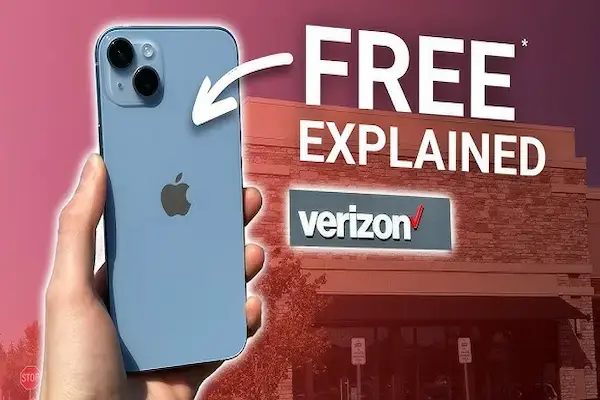
What usually happens is quieter than that.
The device gets billed in monthly installments, and a promotional credit lands on the same bill to cancel each installment out.
Net result over the full term: close to nothing paid for the handset.
The catch sits in the word term. The credit keeps arriving only while the line stays active and eligible.
Change the conditions and the credit changes with them, which is when free stops feeling free.
Bill credits or an instant discount
A few promotions really do knock the price down at checkout.
The louder headlines almost always run on credits instead.
That is why the first invoice can look wrong, then settle into place by the second or third cycle.
On the bill you will see two lines: one charging for the device, one crediting it back.
They net out. Read them together or the number at the top will scare you for no reason.
It also explains why the same phrase can mean a full offset on one page and a partial discount on another.
What quietly cancels the credits
Leaving early is the obvious one, since credits normally require the line to stay open.
Downgrading the plan is the one people never see coming, because some offers only survive on specific tiers.
Paying the device off ahead of schedule is the strangest of the three.
It feels responsible, and on some promotions it ends the remaining credits on the spot.
Ask that specific question before you clear the balance.
None of this makes the offer dishonest. It makes it a deal with conditions, and conditions are easier to keep when you know them.
Who a new line promotion actually fits
These offers work best for people who were already going to open a line.
A teenager getting a first phone, a partner moving off a family plan, a small business adding a work number.
In those cases the line was coming anyway, so the promotion is pure upside.
The opposite scenario is where the regret lives.
Opening a line only to collect a discount leaves you paying for service nobody uses.
Twelve months later, the unused line has usually cost more than the phone was worth.
That is also why new customers see the strongest offers. They tend to arrive with several lines at once.
There is a middle path worth knowing about too.
If someone in the household is already paying for a line elsewhere, moving that line over can qualify as a switch instead of an addition.
Same phone, same promotion, and no extra service on the bill afterwards.
Switch and get a free phone: the order that prevents surprises
The fastest checkout is where most mistakes happen.
Slow it down by a few minutes and follow the same sequence every time.
- Decide whether you need a new line or just an upgrade on a line you already pay for.
- Pick the exact model before comparing offers, since terms shift by device and even by storage size.
- Read the promotion terms the way you read a prescription label, not the way you read a billboard.
- Compare the full monthly total across every line, not the sticker price of the phone.
- Ask out loud what happens if you switch plans, close the line, or pay the device off early.
- Screenshot the offer page and keep the confirmation email in one folder.
- Watch the first two invoices closely, because credits often start one cycle late.
The same order works for a single line and for a household of five.
It turns a promise on a banner into something you can verify on paper.
Moving your number without losing anything
Switching feels risky mostly because of what people imagine losing.
The number, the photos, the two factor codes, the apps nobody remembers the password to.
Split it into three jobs and the fear drops immediately.
Job one is the number transfer. Job two is the device setup. Job three is qualifying for the promotion.
For the transfer, pull your current account number and transfer PIN before you start anything else.
Keep the old line active until the port completes, because canceling first can kill both the number and the offer.
Trade in readiness without the stress
Trade in offers can carry real weight when the old device still powers on and passes a basic inspection.
Screen cracks, a swollen or dying battery, and an activation lock are the three things that usually disqualify it.
Check the lock first, because a phone tied to someone else’s account is worth nothing at the counter.
Back everything up before you hand it over, then erase it properly.
Even when trade in is not required, an erased and charged phone makes the whole appointment shorter.
The plan requirement almost nobody checks
Shoppers study the phone and skim the plan, which is backwards.
The phone is a one time decision. The plan is what shows up every month for years.
If the offer only works on a premium tier, price that tier against the plan you would have chosen on your own.
Multiply the difference by the length of the promotion.
Often that number is larger than the phone you were being given.
Free phone deals: what still lands on the bill
A good offer lowers the device cost. It does not make the account free.
That is not a trick, it is just how carrier billing is built.
- Monthly service is charged normally, because you are paying for the network, not the handset
- Taxes and regulatory surcharges apply and vary by state, so treat any quoted total as a range
- Activation or upgrade fees show up on some accounts, usually on the very first invoice
- Extras such as device insurance, extra cloud space, and premium streaming quietly stack on top
Go through the checkout summary line by line before you confirm.
Anything you did not deliberately choose is usually removable right there.
Insurance is the one worth pausing on rather than reflexively declining.
On a phone you are effectively getting for nothing, a monthly protection fee can cost more over the term than replacing the device outright.
On a premium model with a fragile screen, the same fee can be the smartest line on the bill.
Where free monthly service is and is not real
The wish behind that phrase is legitimate. Recurring bills are what break a budget.
Major carriers, though, charge for service even when the device is fully credited.
Truly free monthly service comes from federal assistance programs, not from retail promotions.
With a carrier, the honest target is a lower total cost of ownership: plan, fees, and whatever the phone still costs after credits.
Picking a phone you will still like a year from now
A free 5G handset sounds like a win before you have used it for a week.
The better question is whether the device fits how your day actually runs.
Battery capacity decides it for long shifts, road work, and anyone who lives in navigation.
Camera quality decides it for parents, sellers, and anyone documenting anything.
Storage decides it once the phone becomes the family archive.
Years of software updates decide it for security, and that spec is the one nobody reads.
Choose the phone you would still want if the promotion vanished, and the promotion becomes a bonus instead of the reason.
eSIM, physical SIM, and phones with no tray
Newer models increasingly ship without a SIM tray at all.
Activation happens through an eSIM profile you scan or download, which makes switching between devices much faster.
It also means an older handset you planned to bring along may not support the method your carrier uses.
Confirm which one applies before activation day, not during it.
Free iphone with new service: the version everyone asks about
Apple models are where these promotions get the most attention, and the most confusion.
A free iphone with new service almost always means the highest credit tier, which almost always means the highest plan tier.
Storage matters here more than anywhere else, because the base model is usually the one carrying the full offset.
Step up one storage level and part of the discount can disappear without any warning on the page.
Trade in also weighs heavier on Apple offers, since a working recent model can push the credit from partial to complete.
If an iPhone is what you actually want, check three things in order: which model qualifies, which plan it requires, and how many months the credits run.
Get those three right and the offer is genuinely strong. Get them wrong and you are financing a premium phone at a premium plan price.
Buy one get one against a single free phone headline
When two phones are needed at the same time, a paired offer often beats a solo one.
Couples, roommates, and families upgrading together tend to come out ahead this way.
Paired offers carry more conditions though, usually on which lines and which devices qualify.
Judge them on the total monthly bill across every line, because that is the only number that tells the truth.
If the household already needed both phones, it is close to effortless value.
If it pushes you into a line nobody asked for, the shine is gone by the third invoice.
Phone plans with free phones: compare them the same way every time
Every banner is engineered to feel urgent, which is exactly why a fixed framework helps.
Run all of them through the same five questions and the emotional pull disappears.
- Name your scenario first: adding a line, switching carriers, or upgrading. Eligibility changes with each one.
- Identify how the discount arrives, instantly or through monthly credits spread over the term.
- Check which plan the offer requires and compare it against what you would pick unprompted.
- Be honest about how long you plan to stay, because credits only pay out over time.
- Confirm you would still choose that phone with no promotion attached at all.
Whichever offer survives all five is the one worth signing.
Offer or program: why the wording confuses people
Some shoppers expect one universal deal that applies to everyone.
Others expect a permanent program that never changes terms.
Neither exists. Promotions rotate, and two phones on the same page can carry different conditions on the same day.
The official offer page is the only source that matters, and it matters more than any article, including this one.
How to spot a fake giveaway page
Anything shaped like an instant win spreads fast, and that is precisely what fake pages copy.
Excitement lowers caution, and lowered caution is the whole business model.
- Real offers explain the structure, the eligibility, and the company behind them without being asked
- A page that wants personal details before it explains anything is collecting data, not giving phones
- Check the address bar carefully, because lookalike domains copy logos and layouts almost perfectly
Sweepstakes are a separate category entirely, with entry rules and random selection rather than eligibility.
Verify through the carrier’s own site or an authorized retailer, and nothing else.
Coverage decides more than the discount does
A free phone on a network that drops calls at your kitchen table is not a bargain.
Signal at home, at work, and along your commute outweighs any promotional value.
Marketing maps are optimistic. Neighbors and coworkers standing in the same buildings are not.
Ask them before you ask the sales floor.
Then look at how you actually use data, because streaming, hotspot use, and travel change which plan makes sense.
Quick checks before you sign with any carrier
- Test coverage where you spend the most hours, especially indoors and in older buildings
- Match the plan to real usage instead of buying unlimited out of anxiety
- Find out how support works before you need it, not during an outage
- Check roaming and hotspot rules if you travel, since that is where bills go strange
Five minutes on these four questions saves more money than any promotion on the page.
Write the answers down somewhere you will find them again.
Offers rotate every few weeks, and the one you rejected in March may be the right one in July.
Questions people ask before switching
Is the phone actually free at checkout?
Occasionally, yes. Far more often the discount arrives as monthly credits over the term of the agreement.
On paper the device looks financed, and in practice it nets out to close to nothing.
Why is my first bill higher than expected?
Credits frequently begin one cycle after activation, so the first invoice carries the full device charge.
Partial month service and activation fees land on that same bill, which makes it the worst one of the year.
Can I close the line and keep the remaining credits?
Generally no. Most promotions tie the credits to an active, eligible line and plan.
Read the terms before canceling so the remaining balance does not arrive as a surprise.
What if I need just one line and one device?
Compare a single line offer against a switching offer, because they are priced very differently.
Depending on where you are coming from, the switch route often pays more.
Do the cheapest models still qualify for strong credits?
Frequently they do, and entry level devices are where the full offsets usually show up.
A phone that covers what you need beats a premium label you are still paying for in year three.
Free phone when you switch is a real thing. It is just a deal with rules attached, and rules are only dangerous when nobody reads them.